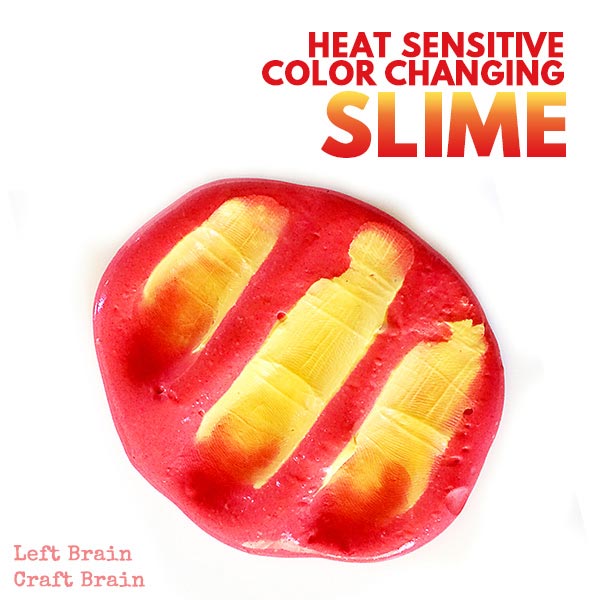
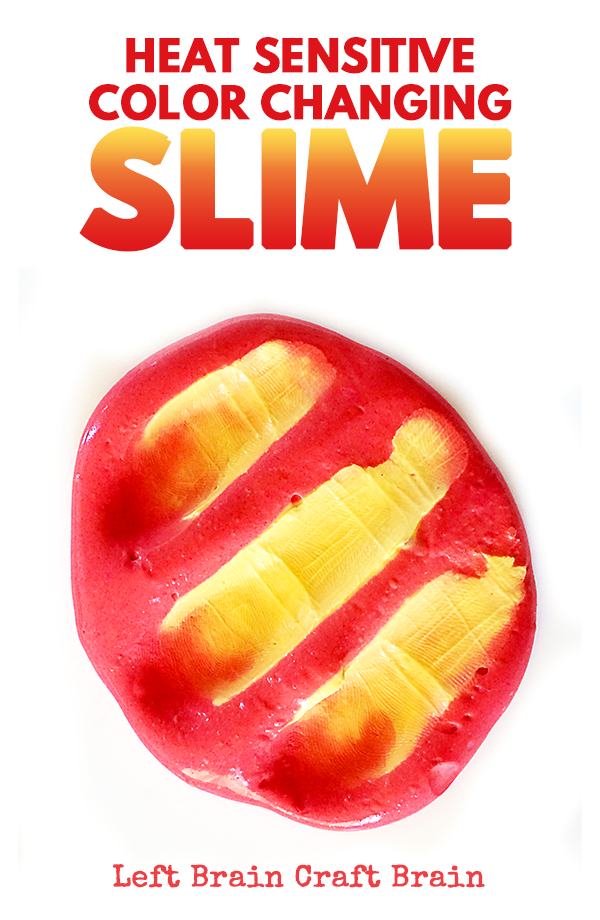
Color changing slime? Absolutely. This slime is soooo fun. We can’t stop playing with it. Hot hands, cold drinks, the sun all make this slime change color. It’s Heat Sensitive Color Changing Slime. And there’s some pretty cool science behind it, too. This post contains affiliate links.
What is Thermochromism?
This slime gets its color-changing superpowers from thermochromic pigment. Thermochromic materials change colors when there is a change in temperature. Mood rings and lipstick use them. And so do those rubber duckies that tell you when the bath is too hot for baby.
There are two main types of thermochromic materials: liquid crystals and leuco dyes. In liquid crystals, temperature changes cause the crystals to move and change the spacing between them, which then causes light to refract at different wavelengths. Different wavelengths create different visible colors. (For more on that phenomenon, check out this Prism Play post.) Leuco dyes use a similar mechanism, but instead of changing the distance between crystals, temperature changes cause the dyes to change molecular structures. One form reflects colored light, the other colorless.
How Do You Play With the Thermochromic Slime?
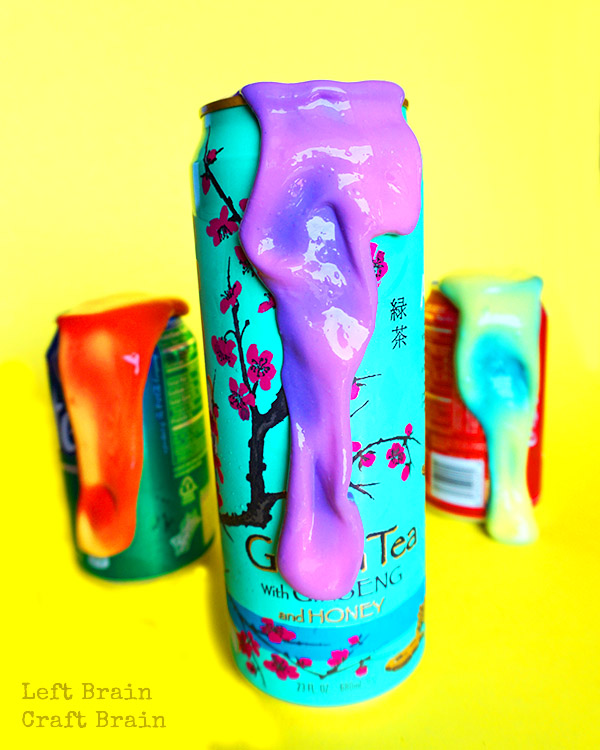
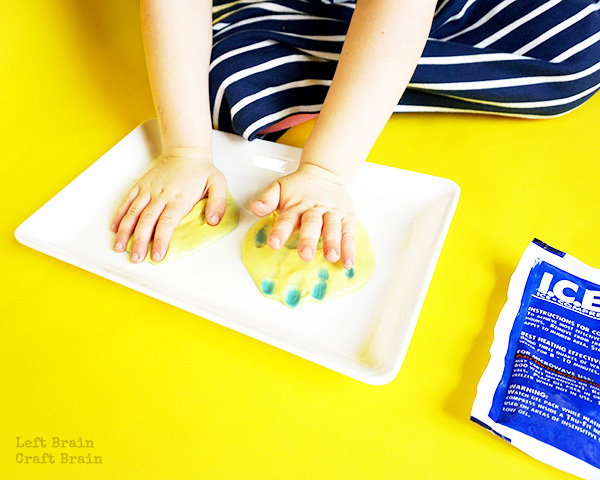
This really was the fun part… Dreaming up ways to make the slime change color. Putting it on soda cans and coffee cups. Holding it with hands that have held an ice pack or heating pad. Breathing on it. Spinning it like a jump rope. (Really! It gets colder because of the air flow around it.) Using it as a thermometer (the pigments we used go clear at 71.6 ºF so we could tell whether it was hotter or colder than that.) Putting it in hot and cold water baths. So much fun!
You can watch the slime change color in this video!

Heat Sensitive Color Changing Slime Recipe
- 1/4 cup white school glue
- 1 Tablespoons water
- 3 teaspoons Thermochromic pigment
- 1/4 cup liquid starch
- Food coloring
- Decide on your color scheme for the slime. The color of thermochromic pigment will be the color of the slime when it is cold. Then pick an alternating color of food coloring for the hot color. Think color wheel neighbors to make the transition smooth. I used:
- Blue pigment with yellow food coloring (Slime is teal and turns yellow when hot)
- Red pigment with yellow food coloring (Slime is orangey-red and turns yellow when hot)
- Blue pigment with red food coloring (slime is purple and turns pink when hot)
- Pour 1/4 cup glue into a large bowl. Add 1 tablespoon water and stir until combined. Add 5 drops of food coloring and mix well. Then add 3 teaspoons of thermochromic pigment and mix until uniformly distributed.
- Add 1/8 cup liquid starch and mix until thick and slimy. Then knead the slime with your hands and return to the starch mixture for another mixing. This step is important because it makes sure there’s no unmixed glue hiding in the center of your slime ball. If slime is still sticky, add additional starch, a little bit at a time, and knead until not sticky anymore. Most batches will use almost all of the starch.
- Store slime in a glass or plastic container with a lid for up to one week. I noticed that it needed a bit more starch if it had been a few days since playing with it. Just pour a teaspoon or so on the slime and knead it again.
Color Changing Play Dough
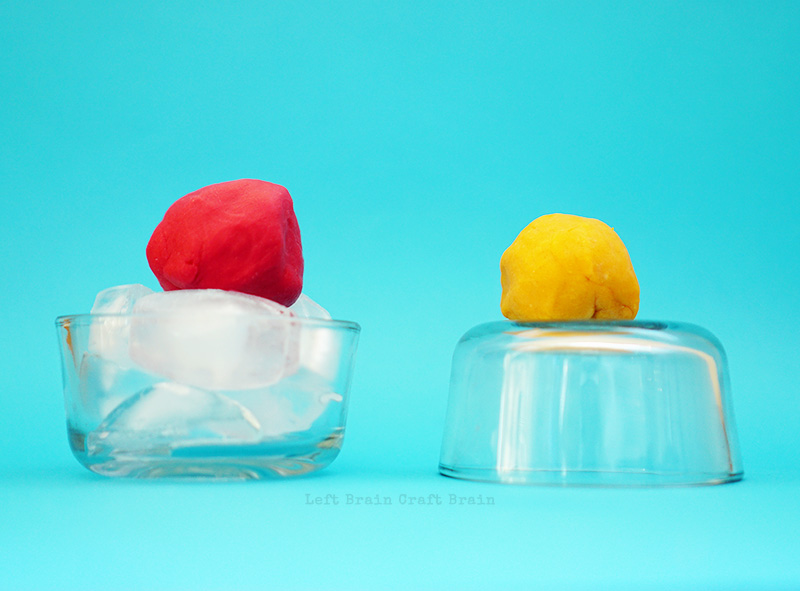
A bunch of you have been asking me, “Does this work with play dough?” YES! It does and it’s so cool.
Looking for some more STEAM inspiration that you can use right now? Instant gratification style? Check out STEAM Explorers!! The coolest creative experience for kids is here! It's a digital book of the month club filled with tons of fun stuff for the kids to do and learn. All engineer, teacher, and mom-approved. And most definitely KID APPROVED!

What’s included?
- A monthly digital magazine with cool themes that are fun to read
- Hands-on, exciting projects the kids will love.
- Science, tech, engineering, art, and math learning YOU’LL love.
- Delicious recipes the kids can make.
- Fun printables and games
Get ready to have some festive fun in this month's Space issue!
Join us as we explore the weather all around us for the STEAM Explorers Weather EBook Unit Study!! Kids will love creating weather in a jar, capturing the daily forecast in an art journal, and becoming a meteorologist with DIY tools. You'll love the helpful standards-based learning, printables, and tools that make STEAM (science, technology, engineering, art, & math) exploration easy!
We’ve split the STEAM Explorers Space issue into four weekly themes:
WEEK 1: Earth & Moon
WEEK 2: Space Travel
WEEK 3: Solar System
WEEK 4: Starry Skies

Sensory Play STEM Learning
Looking for more fun ways to combine STE(A)M learning with sensory play? Try these other Left Brain Craft Brain SLIME projects: